Prompt structure
[subject] + [one visible action] + [environment] +
[shot size] + [camera movement] + [lighting/mood] +
[continuity or exclusion constraint]
1. Cinematic establishing shot
[place] at [time of day], [weather or atmosphere],
wide establishing shot, slow [push-in / crane / lateral move],
[lighting character] and [color direction],
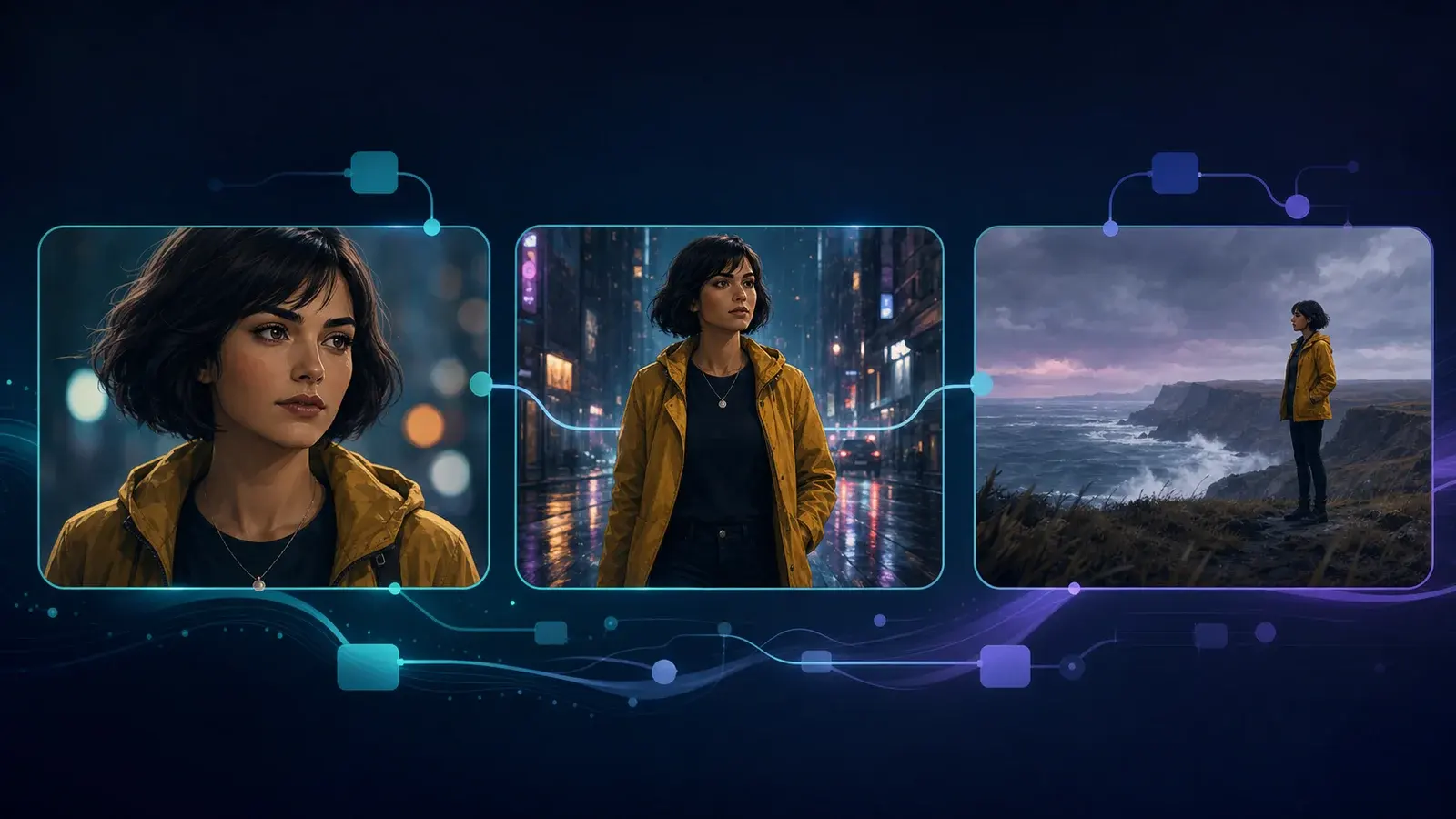
natural environmental motion, no visible text.
2. Character entrance
[character reference] enters [environment] and [single action],
medium-wide tracking shot moving in the same direction,
[light source] with [mood], preserve wardrobe and facial identity,
physically coherent movement, no added characters.
3. Product hero orbit
[product reference] on [surface], slow controlled orbit,
[key light] with a narrow rim light, accurate material response,
clean background, preserve product geometry and markings,
no extra logos or text.
4. Macro product detail
Extreme macro view of [material/detail] as [small visible action],
slow slider movement, shallow depth of field,
soft directional light revealing texture,
preserve exact shape and surface finish.
5. Handheld documentary
[subject] performs [ordinary action] in [real location],
observational medium shot with restrained handheld drift,
available natural light, realistic pace and background movement,
no dramatic effects or staged posing.
6. Overhead process shot
Overhead view of [hands/person] completing [one process step]
on [work surface], locked camera with subtle natural movement,
even soft light, objects remain in their original positions,
clear readable action, no visible interface text.
7. Food or beverage pour
[liquid/ingredient] pours into [container] on [surface],
close three-quarter view, slow dolly-in,
backlight reveals droplets and texture,
natural fluid motion, preserve container geometry, no added labels.
8. Fashion walk
[character reference] walks through [location],
full-body lateral tracking shot at matching pace,
[time of day] light with gentle fabric movement,
preserve face, hairstyle, wardrobe construction and body proportions.
9. Architecture reveal
Start close on [foreground detail], then slowly reveal [building/space]
with a smooth crane rise, [weather] and [time of day],
realistic perspective and reflections, no structural changes.
10. Vehicle tracking
[vehicle reference] moves along [road/environment],
low side tracking shot at matching speed,
[lighting] with realistic wheel rotation and reflections,
preserve model geometry, paint color and travel direction.
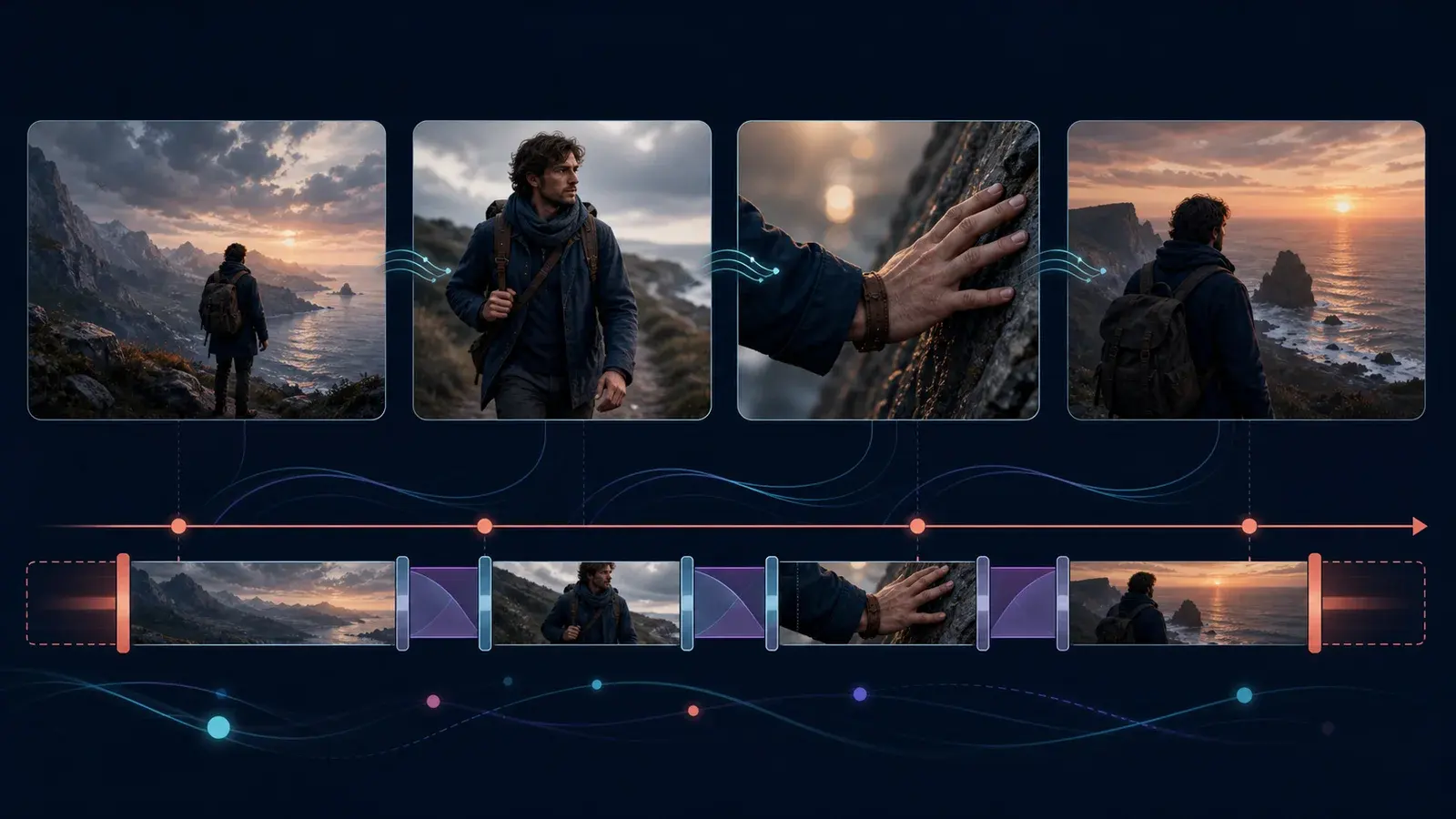
11. First-to-last-frame transition
Transition from the supplied start frame to the supplied end frame.
[Subject] performs [connecting action] while the camera [movement].
Preserve identity, screen direction and environment geometry;
the final composition resolves naturally into the end frame.
12. Vertical short-form hook
Vertical close-up of [subject] immediately [clear hook action],
fast but readable push-in during the first moment,
high-contrast practical lighting, uncluttered background,
leave clean negative space for text added later in editing.
13. Quiet emotional close-up
Close-up of [character reference] reacting subtly to [event],
locked camera with a very slow push-in,
soft side light, restrained expression and natural eye movement,
preserve facial identity; no exaggerated emotion.
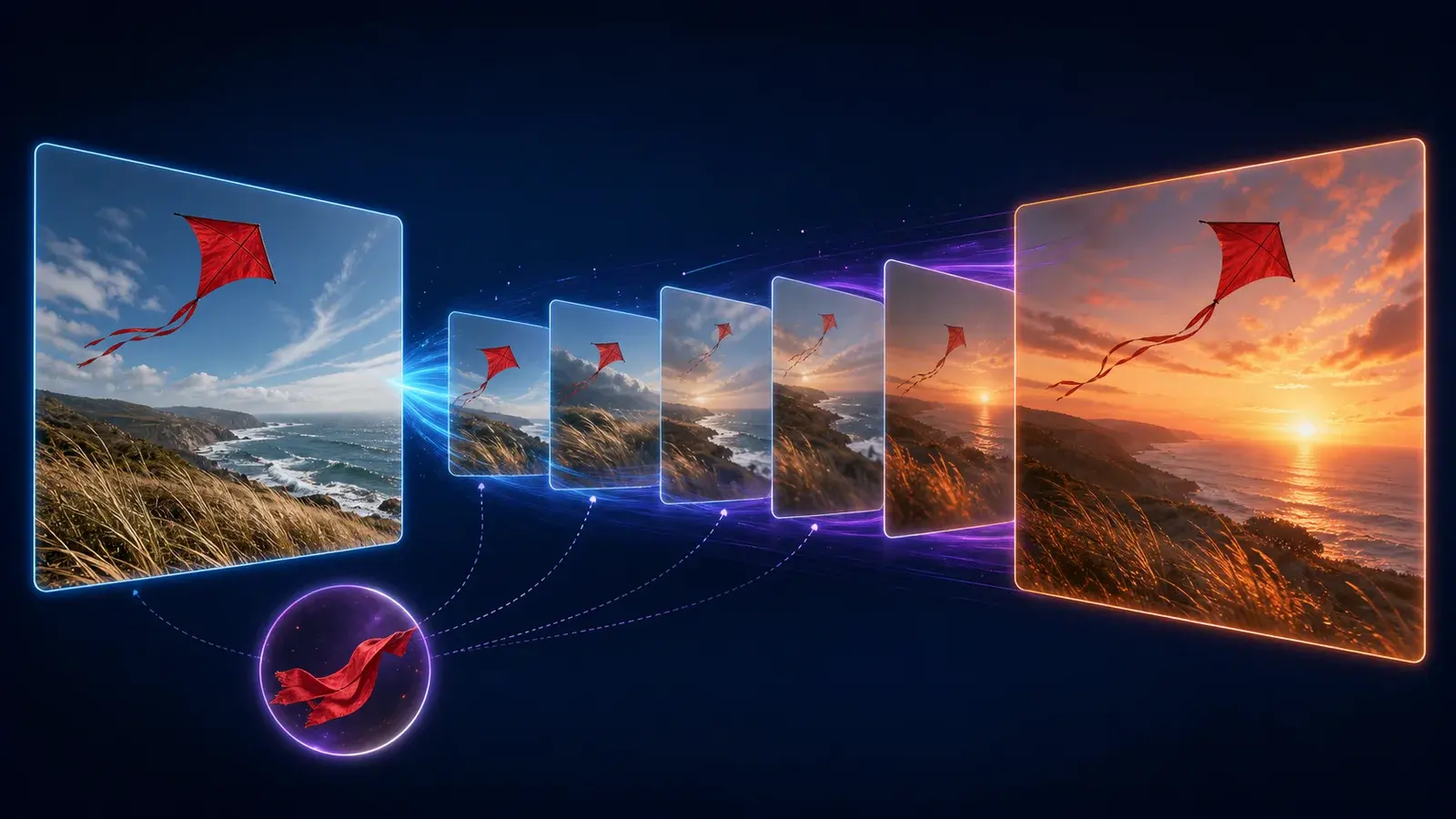
14. Environmental time shift
[location] changes from [condition A] to [condition B]
while the camera remains [locked / slowly moving],
continuous geometry, believable changes in light and atmosphere,
no sudden object appearance or camera jump.
15. Scene extension
Continue the existing action as [subject] [next simple action].
Maintain the same camera direction, motion speed, lighting,
environment layout and character appearance.
Do not introduce a new subject or change the visual style.
Camera variables to test
Change one at a time: locked-off, handheld drift, dolly-in, lateral tracking, slow orbit, overhead descent, crane rise or macro slide. Pair the move with a shot size and a visible subject action.
Common failure modes
Several competing actions in a short clip.
Camera instructions that contradict one another.
Style adjectives without a concrete scene or light source.
References that disagree in identity, background or lighting.
A long negative list that overwhelms the main action.
Treating any template as a guaranteed output.
Sources and verification
Sources support product facts; editorial judgment remains FlowTool's own. Links were last checked on the date shown above.
Frequently asked questions
Are these Google Flow prompts tested?
No. They are editorial templates and are not independently output-tested. Results depend on the current model, references, controls and edits.
What should a Google Flow prompt include?
Start with subject, one visible action, environment, shot size, camera behavior, lighting and only essential continuity constraints.
Should Google Flow prompts be long or short?
Use enough detail to define the visible shot without stacking conflicting actions or decorative adjectives. Clear structure matters more than raw length.
Visible FAQ is provided for readers. FlowTool does not promise FAQ rich results.
Continue with FlowTool
Build a clearer Google Flow workflow.
Use the beginner workflow, then choose a prompt template or compare alternatives based on your actual constraints.
Open the beginner tutorial